
Why VOC Control Is Important in IVF Laboratories
VOC control matters in IVF laboratories because volatile organic compounds inside the embryo culture environment can impair embryo development and reduce IVF success rates. The European Society of Human Reproduction and Embryology (ESHRE) recommends total VOC (TVOC) levels below 500 µg/m³ in IVF lab air, monitored continuously rather than checked periodically.
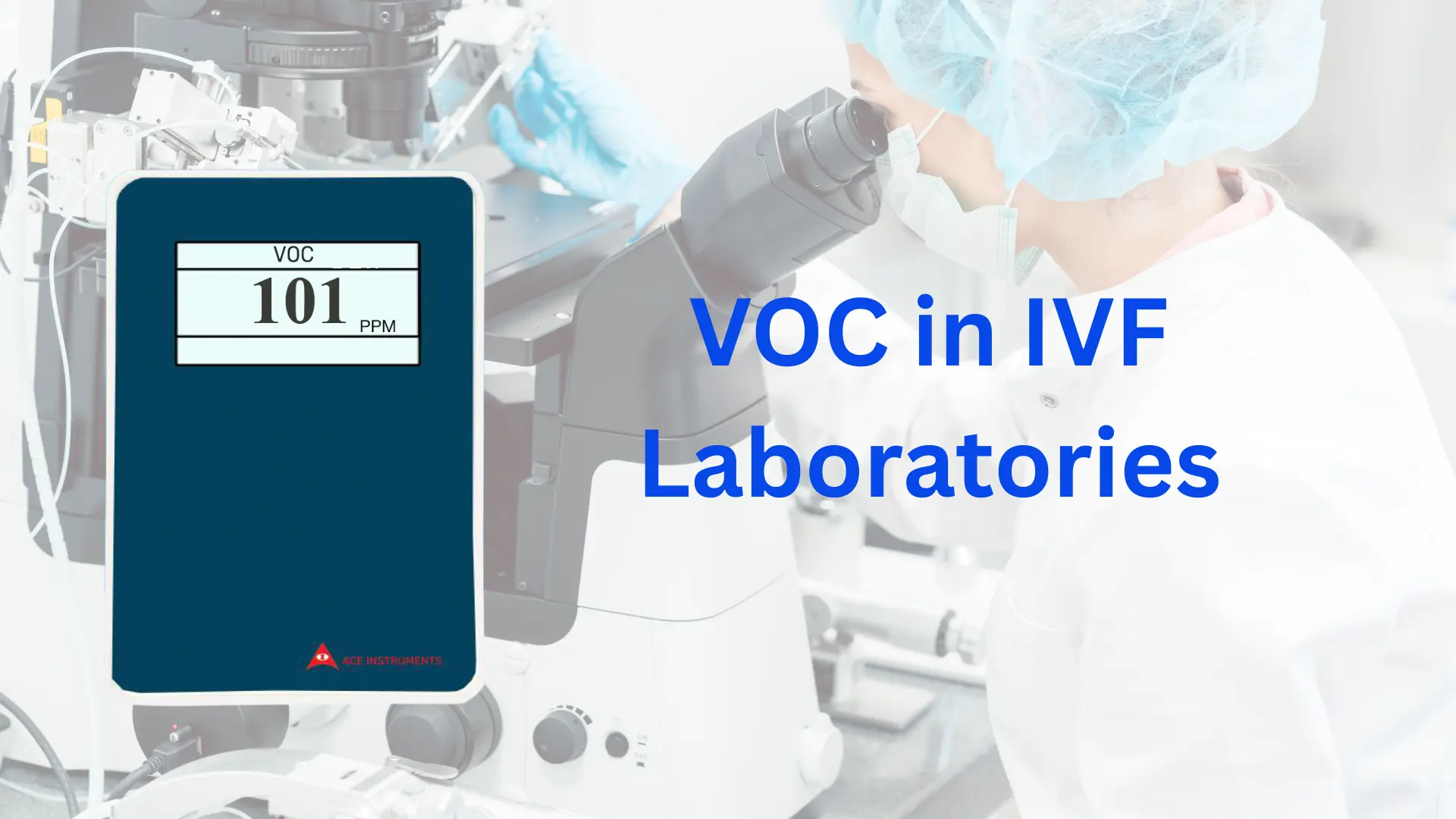
VOC control matters in IVF laboratories because volatile organic compounds inside the embryo culture environment can impair embryo development and reduce IVF success rates. The European Society of Human Reproduction and Embryology (ESHRE) recommends total VOC (TVOC) levels below 500 µg/m³ in IVF lab air, monitored continuously rather than checked periodically.
How VOC Exposure Affects Embryo Development
Embryos cultured outside the body are far more sensitive to their immediate air environment than adult patients are, because there is no maternal physiology buffering them from airborne contaminants. VOCs released from paints, adhesives, flooring, cleaning agents and even outgassing plastics inside the lab can accumulate in incubator air and culture dishes, and several have been associated with reduced embryo development rates and lower clinical pregnancy rates in published embryology literature.
This is why ESHRE's laboratory guidelines treat VOC control as a core air quality requirement for IVF labs, not an optional extra layered on top of general cleanroom practice.
IVF labs that have moved to continuous TVOC logging typically catch a contamination event: a fresh coat of paint in an adjoining corridor, a new batch of gloves outgassing plasticiser, within hours rather than discovering it weeks later through unexplained variation in fertilisation rates, which is the practical argument for continuous monitoring over periodic testing in any accredited IVF facility.
Monitoring TVOC in the IVF Lab Environment
Continuous monitoring with a Swiss PID VOC detector inside the lab and embryo culture room gives a real-time TVOC trend rather than a single point-in-time reading from periodic spot testing. Because VOC sources in a lab can be transient — a cleaning cycle, a delivery of new consumables, an HVAC filter change — continuous logging catches excursions that a quarterly air test would miss entirely.
TVOC levels should be maintained below 500 µg/m³ per ESHRE laboratory guidelines. Pressure cascade should be positive and maintained per cleanroom class, in line with ISO 14644-1 and EU GMP Annex 1 (2022).
Why Ace Instruments
Ace Instruments has manufactured air quality and environmental monitoring instruments from its 10,000 sq.ft Hyderabad facility since 1991, with more than 1,000 installations worldwide. Every IAQ Detectors instrument referenced in this article is CE certified and produced under an ISO 9001:2015 quality system.
FAQ
Q: What is a safe VOC level in an IVF lab?
A safe VOC level in an IVF laboratory is a total VOC (TVOC) concentration below 500 µg/m³, the benchmark used in ESHRE laboratory guidelines.
Q: Why are embryos sensitive to VOCs?
Embryos cultured in vitro lack the physiological buffering of the maternal body, so airborne VOCs from lab materials and finishes can reach culture media and incubator air at concentrations that affect development.
Q: How is VOC monitored in an IVF lab?
VOC is monitored in an IVF lab with a continuous Swiss PID VOC detector logging TVOC in real time, rather than relying on periodic spot air testing.
Q: Does an IVF lab need cleanroom classification?
Many IVF labs are increasingly built and operated to cleanroom principles, referencing ISO 14644-1 classification and EU GMP Annex 1 (2022) pressure cascade requirements alongside ESHRE's VOC guidance.
Know the latest trends in IAQ solutions from the Ace Instruments team


Instruments that exceed your technical expectations
Comprehensive and customized IAQ solutions for all applications

