
What Is Indoor Air Quality Monitoring in HVAC Systems
Indoor air quality monitoring in HVAC is the practice of placing CO2, VOC and particulate instruments at points in the supply or return airstream, or in the occupied space, so the building management system can adjust outdoor air ventilation automatically. ASHRAE 62.1-2022 treats this as the basis for demand controlled ventilation (DCV) rather than fixed-rate fresh air.
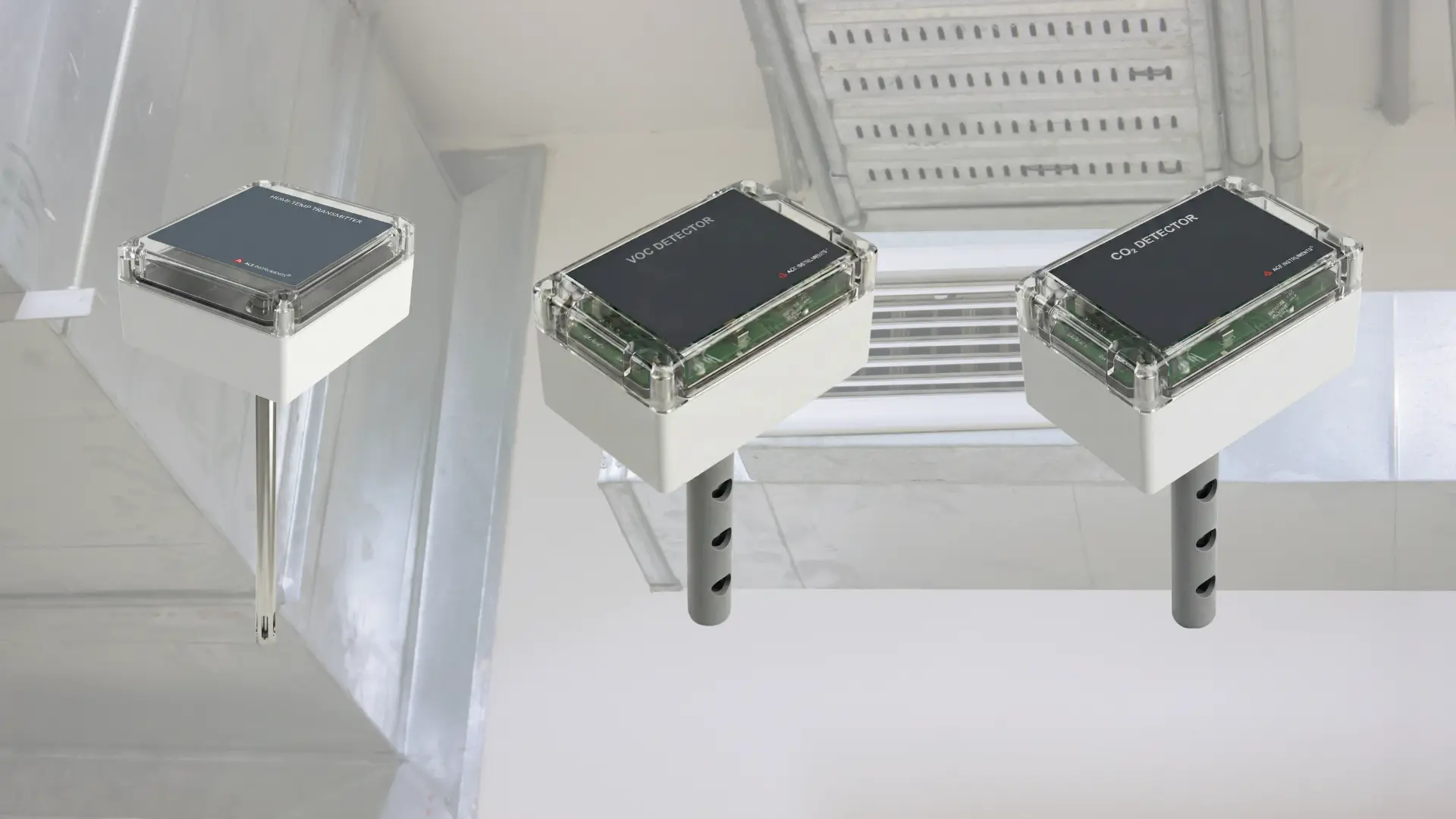
Indoor air quality monitoring in HVAC is the practice of placing CO2, VOC and particulate instruments at points in the supply or return airstream, or in the occupied space, so the building management system can adjust outdoor air ventilation automatically. ASHRAE 62.1-2022 treats this as the basis for demand controlled ventilation (DCV) rather than fixed-rate fresh air.
Where IAQ Instruments Sit in an HVAC System
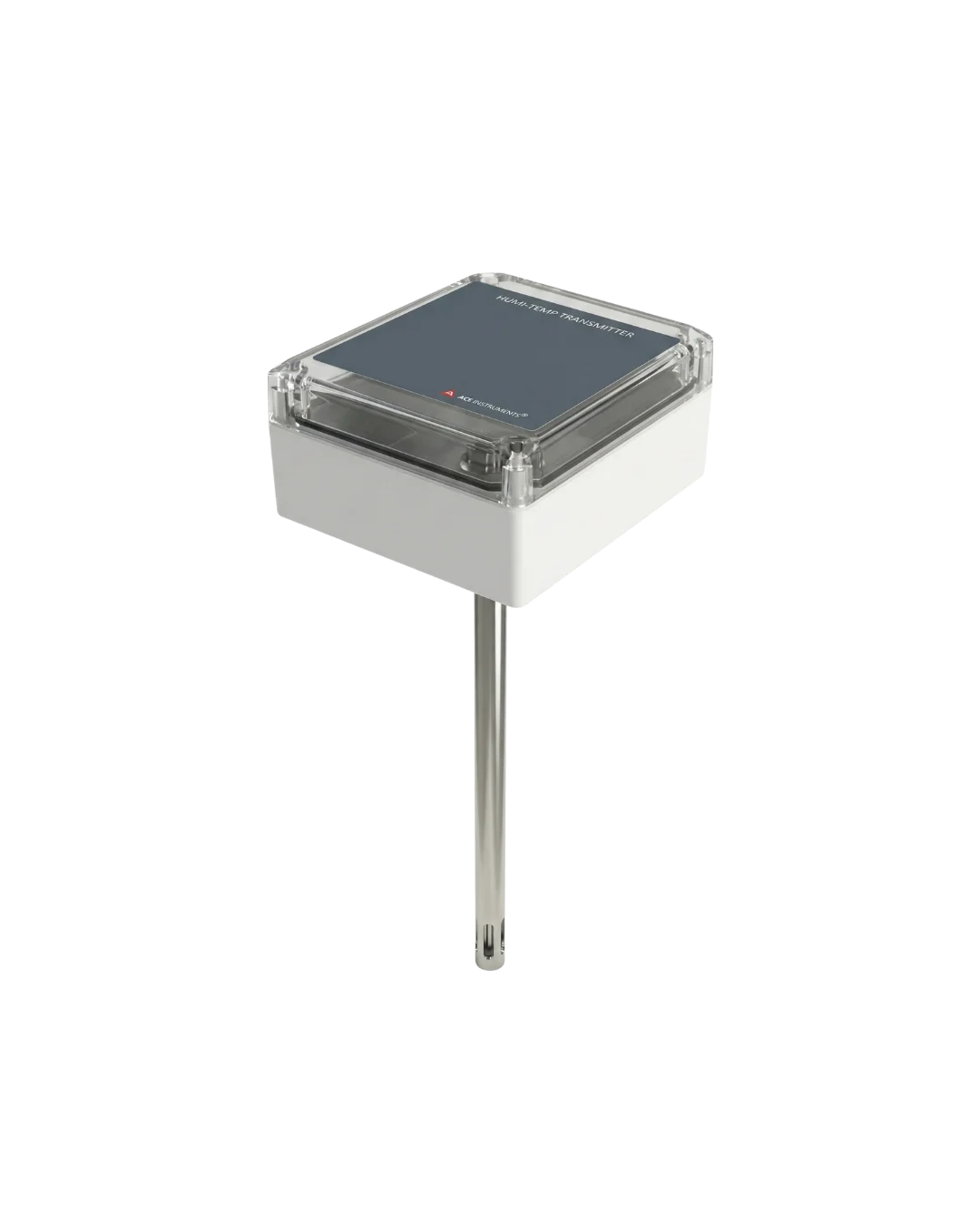
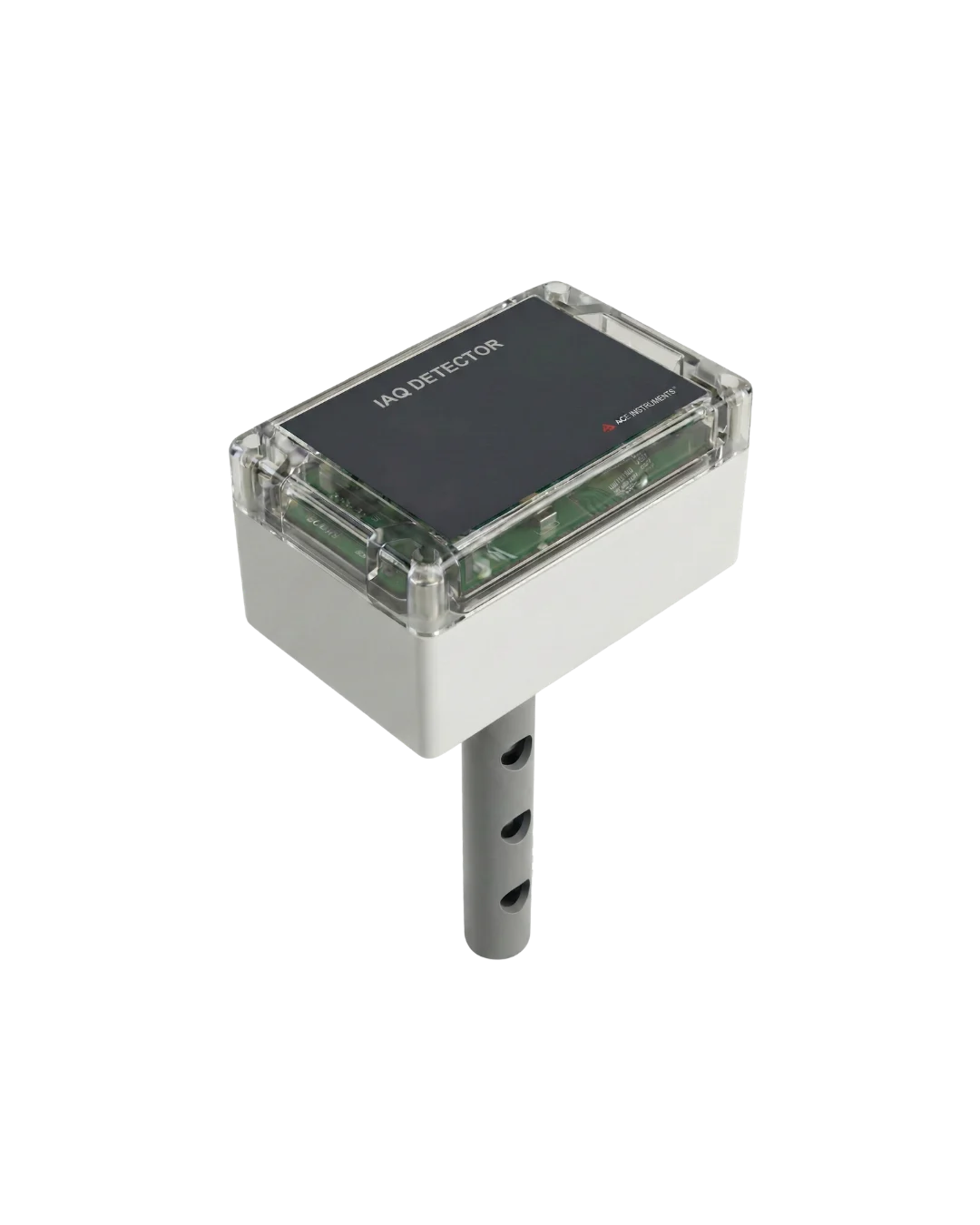
A return air duct location gives an averaged reading for the whole zone served by that air handler, which is the representative point for DCV logic. A supply air duct location, downstream of filtration, verifies that conditioned air entering the space meets target levels rather than measuring occupant-driven pollutants. A room-mounted instrument gives the most localized reading and is the only option that supports a visible local display or room-level alarm.
A facilities team retrofitting IAQ monitoring into an existing HVAC system without rebalancing ductwork should expect the duct-mounted instrument's reading to be more representative of true zone air quality than any single room sensor, since it captures the blended return air from every space the air handler serves — useful when budget allows only one or two monitoring points rather than one per room.
Sensors placed in the return air duct measure zone-averaged CO2, VOC, and PM, making them ideal for central DCV control. Supply air duct placement is used for post-filtration verification, supporting filter and coil performance checks. In occupied rooms, sensors capture localized comfort and alarm data, enabling room-level control and direct occupant display.
How HVAC Systems Use IAQ Data for Demand Controlled Ventilation
In a DCV sequence, the BMS compares the live CO2 (and often VOC) reading against a setpoint derived from ASHRAE 62.1-2022 — commonly 1,100 ppm acceptable or 800 ppm per WELL Standard v2 for higher-performance buildings. As the reading approaches the setpoint, the outdoor air damper opens further; as it falls, the damper closes back toward minimum ventilation, reducing the energy cost of conditioning excess outdoor air during low-occupancy periods.
Why Ace Instruments
Ace Instruments has manufactured air quality and environmental monitoring instruments from its 10,000 sq.ft Hyderabad facility since 1991, with more than 1,000 installations worldwide. Every IAQ Detectors instrument referenced in this article is CE certified and produced under an ISO 9001:2015 quality system.
FAQ
Q: What does IAQ monitoring in HVAC actually control?
IAQ monitoring in HVAC primarily controls the outdoor air damper position in a demand controlled ventilation sequence, opening or closing it based on live CO2 or VOC readings.
Q: Where should an IAQ instrument be installed in an HVAC system?
An IAQ instrument is typically installed in the return air duct for central DCV control, since this location gives a zone-averaged reading representative of the space served by that air handler.
Q: Can a single duct-mounted instrument serve multiple rooms?
Yes, a single duct-mounted IAQ transmitter can serve all rooms fed by the same air handling unit, provided the zone is reasonably homogeneous in occupancy and pollutant sources.
Know the latest trends in IAQ solutions from the Ace Instruments team









Instruments that exceed your technical expectations
Comprehensive and customized IAQ solutions for all applications

