
Why Monitor Carbon Monoxide in HVAC Ducts
Carbon monoxide is monitored in HVAC ducts to detect combustion gas infiltration from parking garages, loading docks or generator rooms before it spreads through return air to occupied floors. WHO sets a maximum safe 8-hour CO exposure of 25 ppm, well below the 200 ppm level associated with headache within two to three hours.
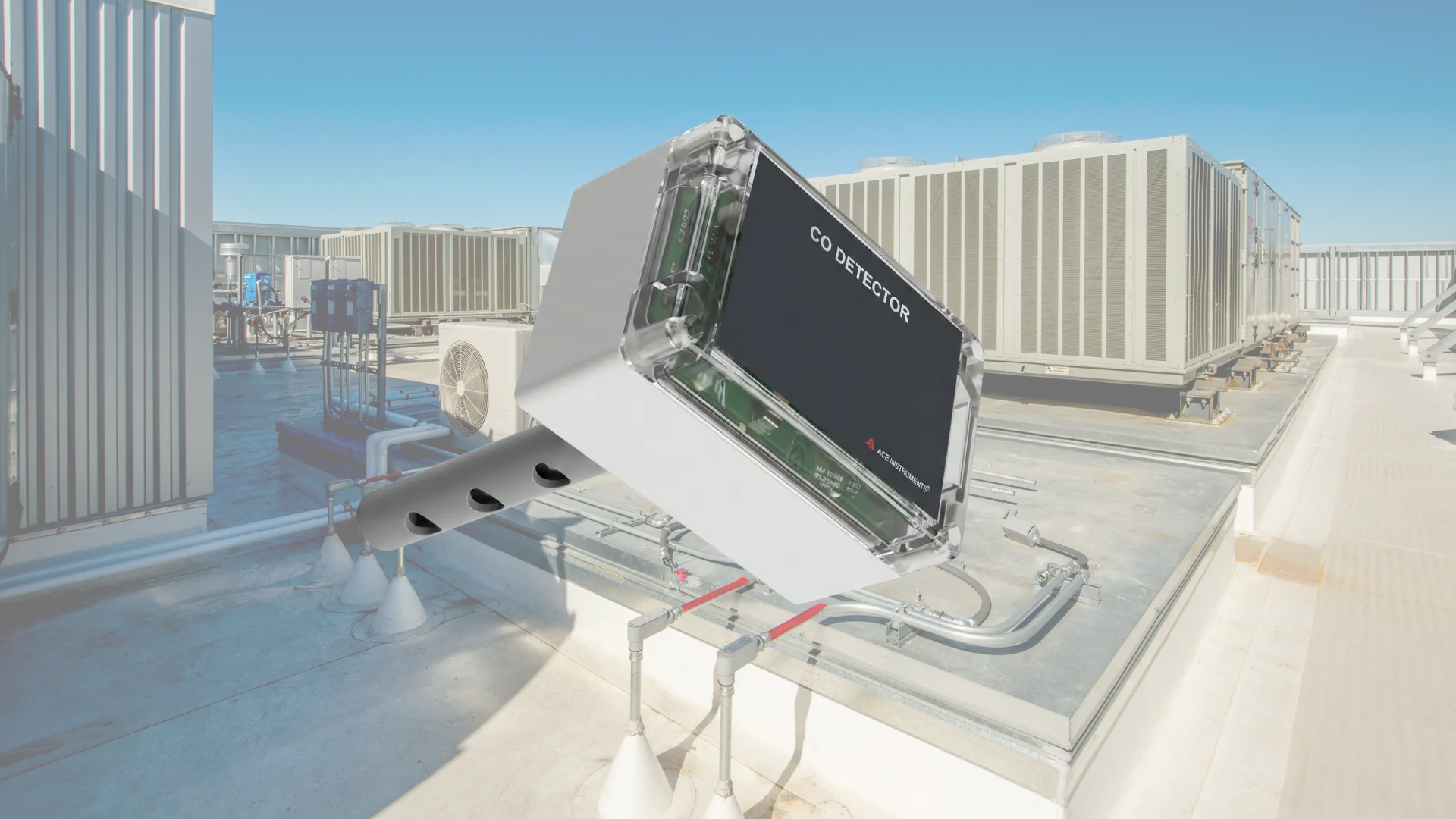
Carbon monoxide is monitored in HVAC ducts to detect combustion gas infiltration from parking garages, loading docks or generator rooms before it spreads through return air to occupied floors. WHO sets a maximum safe 8-hour CO exposure of 25 ppm, well below the 200 ppm level associated with headache within two to three hours.
Common Sources of Duct-Level CO Contamination
Basement parking garages sharing a return air path with office floors above are the most frequent source, particularly during peak vehicle idling at entry and exit times. Standby generator rooms, loading docks with idling delivery vehicles, and boiler rooms with imperfect combustion are the other recurring sources flagged in commercial building CO incidents.
Buildings that have experienced even a single CO exceedance event — most commonly traced to a parking garage ventilation fan left in manual override, or a generator test running longer than scheduled — typically move from periodic spot-check CO testing to permanent duct-mounted monitoring at the shared return air interface, since the cost of a continuous transmitter is small relative to the liability of a repeat incident.
CO Safe Levels Reference
- 9 ppm (WHO annual average) — maximum safe long-term exposure
- 25 ppm (WHO 8-hour) — maximum safe 8-hour exposure
- 35 ppm (US parking garage alarm) — standard alarm setpoint
- 50 ppm (OSHA 8-hr TWA) — workplace limit
- 200 ppm (ACGIH) — headache within 2–3 hours
How Duct CO Monitoring Triggers Ventilation Response
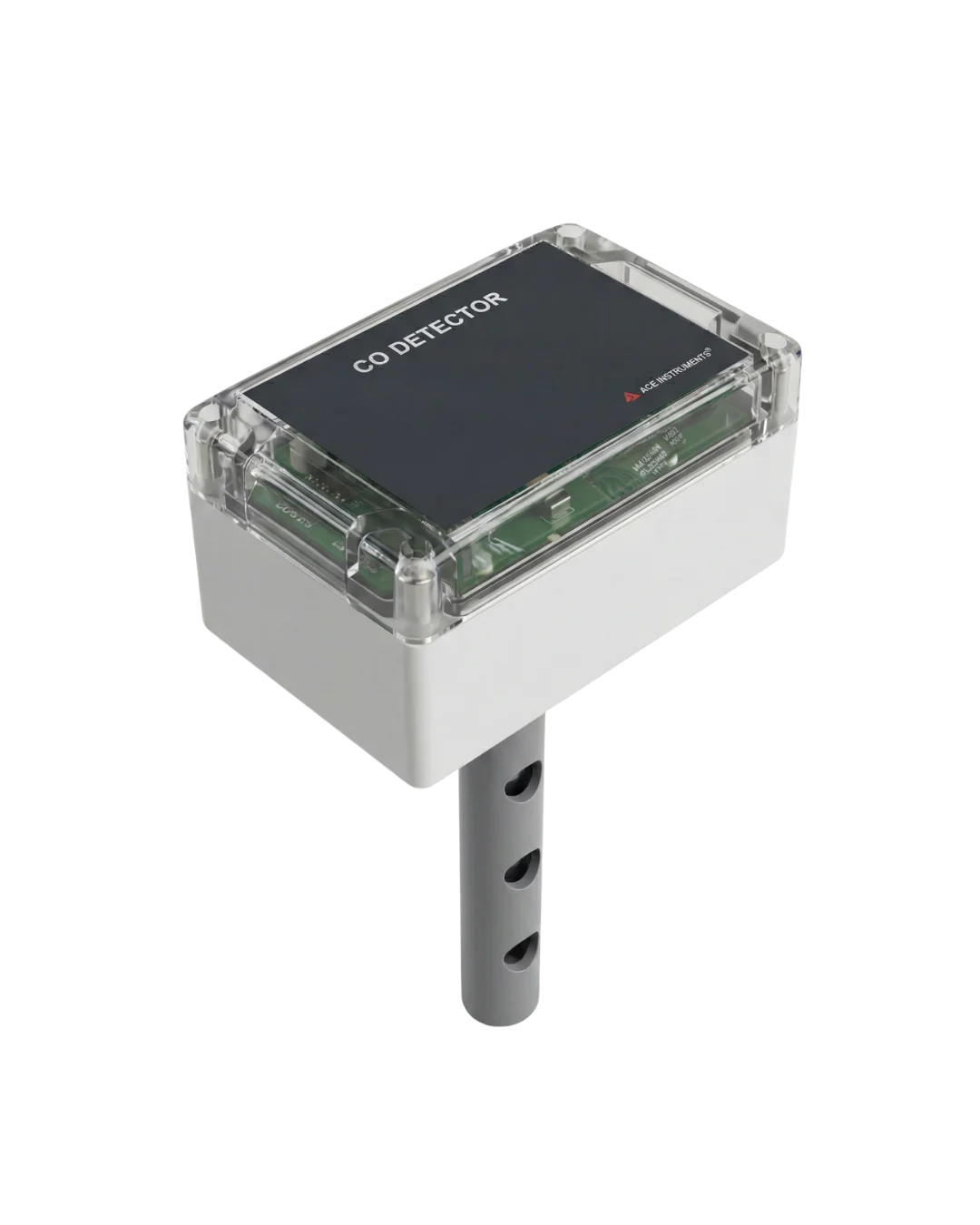
A duct-mounted Japanese electrochemical CO transmitter positioned at the return air interface between a garage or generator room and the main air handling system gives the BMS an early warning point, increasing exhaust fan run time or fresh air intake before CO reaches the building's general return air and occupied floors above.
Why Ace Instruments
Ace Instruments has manufactured air quality and environmental monitoring instruments from its 10,000 sq.ft Hyderabad facility since 1991, with more than 1,000 installations worldwide. Every IAQ Detectors instrument referenced in this article is CE certified and produced under an ISO 9001:2015 quality system.
FAQ
Q: What is a safe CO level in HVAC return air?
A safe CO level in HVAC return air stays below the WHO 8-hour exposure guideline of 25 ppm, with most parking garage alarm systems set to trigger at 35 ppm.
Q: Where should duct CO detectors be installed?
Duct CO detectors should be installed at the return air interface near parking garages, generator rooms or loading docks, where combustion gas is most likely to enter the shared air system.
Q: What CO level triggers an alarm?
Most parking garage CO alarm systems trigger at 35 ppm, the standard US alarm setpoint, well below the 50 ppm OSHA 8-hour workplace limit.
Know the latest trends in IAQ solutions from the Ace Instruments team


Get inspired and learn more

Instruments that exceed your technical expectations
Comprehensive and customized IAQ solutions for all applications

