
Air Differential Pressure Transmitters in HVAC Systems
An air differential pressure sensor in HVAC measures the pressure drop across a component — typically an air filter, cooling coil or fan — to confirm airflow is within design range. A rising differential pressure across a filter signals it needs replacement before airflow, and the ventilation rate it supports, drops below the ASHRAE 62.1-2022 design value.
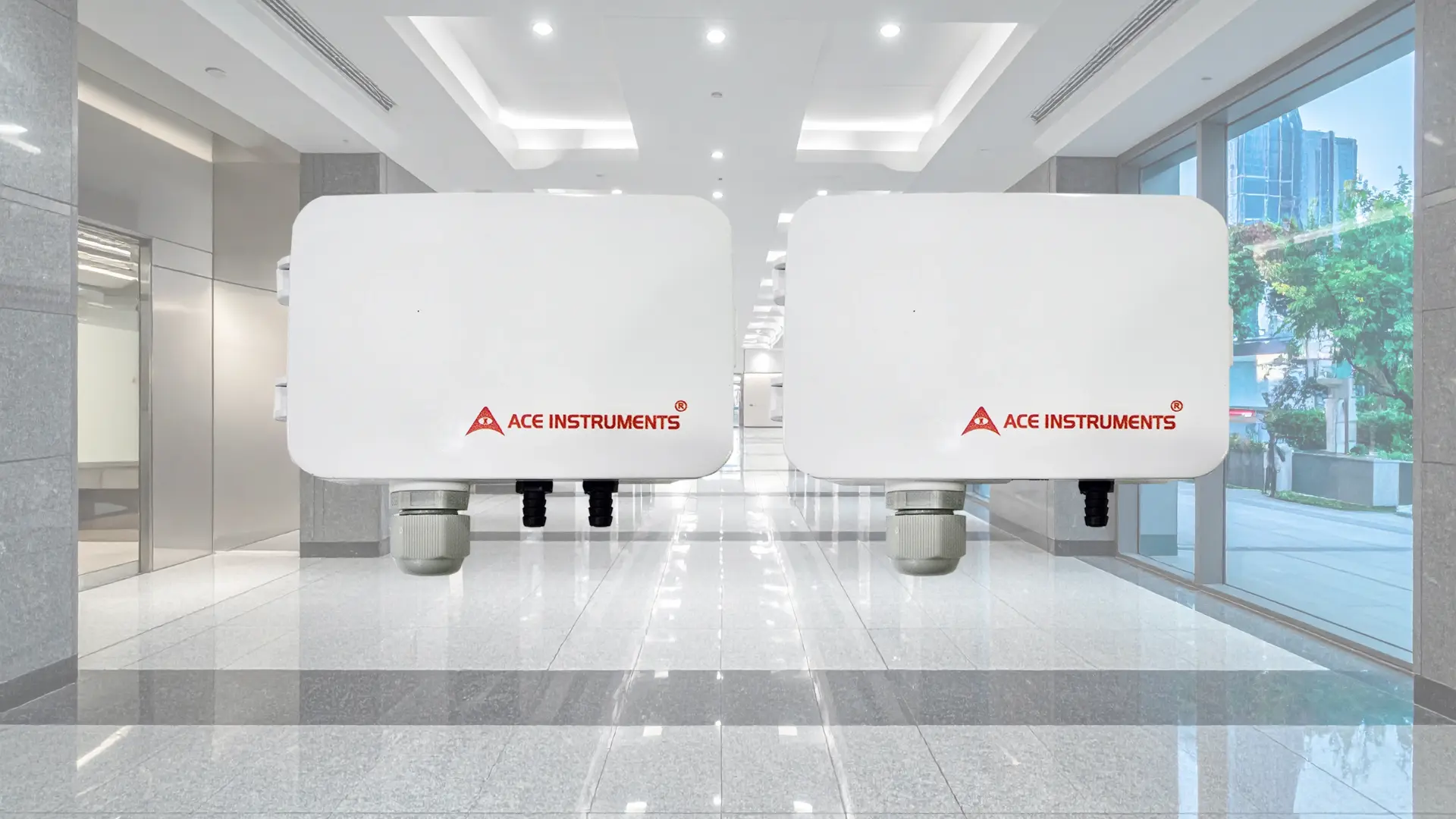
An air differential pressure sensor in HVAC measures the pressure drop across a component — typically an air filter, cooling coil or fan — to confirm airflow is within design range. A rising differential pressure across a filter signals it needs replacement before airflow, and the ventilation rate it supports, drops below the ASHRAE 62.1-2022 design value.
Common HVAC Differential Pressure Applications
Filter monitoring is the most common application: as a filter loads with particulate, resistance to airflow increases, and the differential pressure transmitter reading climbs in a predictable curve until it crosses a maintenance threshold. Fan proving uses a differential pressure transmitter across the fan to confirm it is running and producing expected pressure rather than relying on a simple run-status contact. Duct static pressure monitoring supports VAV (variable air volume) box control, where the BMS modulates damper position to hold a target static pressure as zones call for more or less airflow.
Because differential pressure transmitters are passive measurement devices rather than control devices, they can be retrofitted onto existing filter banks, fans or duct sections without disturbing the underlying control sequence — a common first step when a facilities team wants visibility into filter loading or fan performance before committing to a larger BMS upgrade.
Differential Pressure vs. Static Pressure
Differential pressure is the difference between two measured points — across a filter, across a wall for a cleanroom cascade, or across a damper. Static pressure is a single-point reading relative to atmosphere, most often used in duct static pressure control for VAV systems. The AI-DPTx differential pressure transmitter and AI-DP-S duct static pressure transmitter in the IAQ Detectors range are built for these two distinct measurement types.
Output and Integration
IAQ Detectors differential pressure transmitters output 4-20mA, 0-10V or RS-485 Modbus RTU, allowing direct wiring into existing AHU control panels or BMS points without an additional signal converter.
Why Ace Instruments
Ace Instruments has manufactured air quality and environmental monitoring instruments from its 10,000 sq.ft Hyderabad facility since 1991, with more than 1,000 installations worldwide. Every IAQ Detectors instrument referenced in this article is CE certified and produced under an ISO 9001:2015 quality system.
FAQ
Q: What does a rising differential pressure reading across a filter mean?
A rising differential pressure reading across a filter means the filter is loading with particulate and approaching the point where it should be replaced to maintain design airflow.
Q: What is the difference between differential pressure and static pressure?
Differential pressure is the difference between two measured points, such as across a filter or cleanroom wall, while static pressure is a single-point reading relative to atmosphere, typically used for duct static pressure control.
Q: What output does a differential pressure transmitter use for BMS integration?
A differential pressure transmitter typically outputs 4-20mA, 0-10V or RS-485 Modbus RTU for direct integration with a building management system.
Know the latest trends in IAQ solutions from the Ace Instruments team


Get inspired and learn more


Instruments that exceed your technical expectations
Comprehensive and customized IAQ solutions for all applications

