
Operating Theatre Pressure Monitoring: ASHRAE 170 & NABH Compliance

Introduction
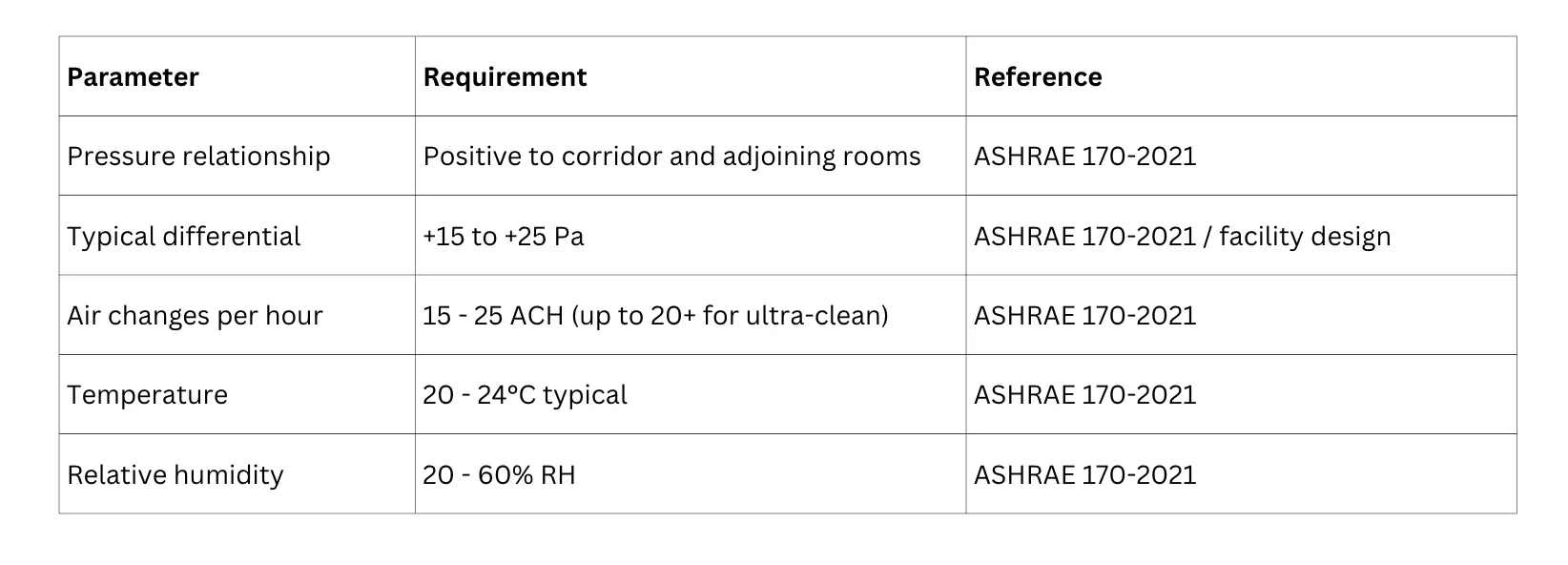
An operating theatre must be kept positive relative to its surrounding corridor and support spaces, so that corridor air carrying skin flora and other contaminants cannot enter the sterile field during surgery. ASHRAE 170-2021 and NABH accreditation in India both require this differential to be maintained and monitored continuously.
Why Operating Theatres Need the Highest Pressure and Air Change Rates
Among all hospital space types, operating theatres carry some of the most demanding ventilation requirements: high positive pressure relative to adjoining spaces, and among the highest air change rates in the building, because the combination dilutes and displaces any airborne contamination introduced by staff movement, instrument trays, or the patient before it can settle near the surgical site.
Ace Instruments AI-DDPG/DP1-1 differential pressure indicator is used at theatre entrances and material transfer hatches to give the surgical and facilities team a continuous, visible confirmation that positive pressure is being maintained, forming part of the IAQ Detectors monitoring approach for critical hospital spaces.
Operating Theatre Ventilation Requirements
How Theatre Pressure Is Monitored and Verified
The AI-DDPG/DP1-1 references the theatre against the adjoining scrub area, corridor, or sterile core, and provides a local display at or near the theatre entrance so the surgical team can confirm correct pressurisation before a procedure begins a check increasingly built into pre-operative safety checklists at NABH-accredited facilities. The same signal is typically routed to the hospital BMS via 4-20mA or RS-485 Modbus RTU output for continuous logging and alarm response.
Because theatre doors open and close during a procedure for instrument or staff transfer, the differential naturally fluctuates in the short term; monitoring is designed around the sustained trend and alarm-on-persistent-excursion logic rather than reacting to every brief dip during a door opening.
Field Note
A tertiary care hospital preparing for NABH accreditation renewal added AI-DDPG/DP1-1 indicators with BMS logging to all eight of its operating theatres after the previous cycle's assessment noted pressure verification relied on an annual balancing report rather than continuous data. The renewed accreditation cycle passed with continuous pressure trend logs submitted as supporting evidence for every theatre.
Frequently Asked Questions
Why must operating theatres be kept at positive pressure?
Positive pressure prevents corridor air, which can carry skin flora and other contaminants, from entering the operating theatre and reaching the sterile surgical field.
What pressure differential is typical for an operating theatre?
Operating theatres are typically maintained at +15 to +25 Pa relative to adjoining corridors and support spaces, in line with ASHRAE 170-2021 and the facility's specific design basis.
Does NABH accreditation require continuous operating theatre pressure monitoring?
NABH assessments increasingly expect continuous, documented pressure monitoring for operating theatres rather than periodic balancing reports alone, aligning with ASHRAE 170-2021 practice.
Why Trust IAQ Detectors
Ace Instruments AI-DDPG/DP1-1 differential pressure indicator is CE certified and manufactured under ISO 9001:2015; IAQ Detectors instrumentation supports operating theatre pressure compliance across more than 1,000 installations in commercial and healthcare facilities worldwide.
Know the latest trends in IAQ solutions from the Ace Instruments team


Get inspired and learn more
Instruments that exceed your technical expectations
Comprehensive and customized IAQ solutions for all applications

