
Duct Static Pressure vs Differential Pressure: Understanding the Difference
Introduction
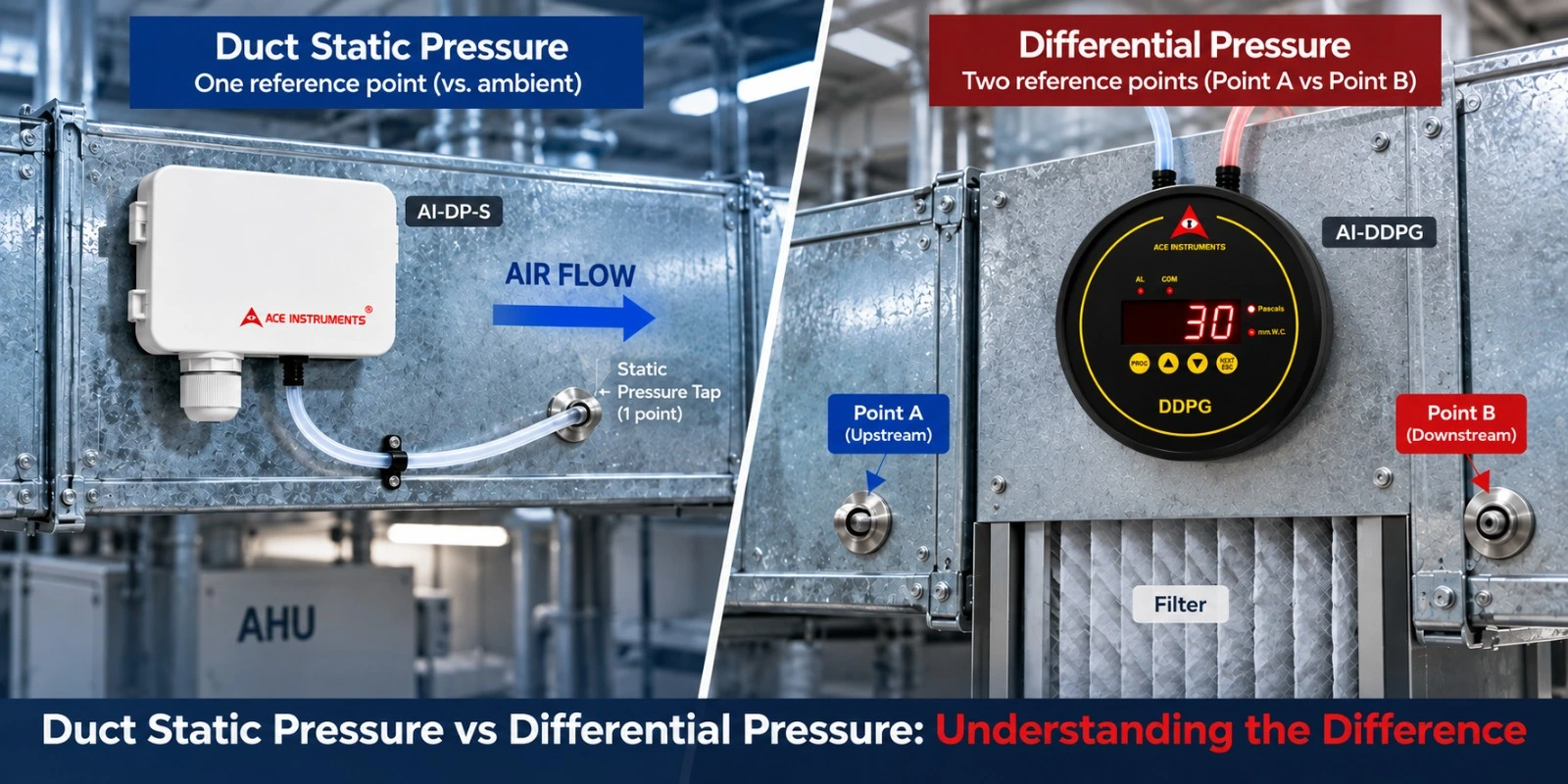
Duct static pressure is measured at a single point relative to ambient atmospheric pressure, while differential pressure is measured as the difference between two separate points; the distinction determines which transmitter, and which control strategy, applies to a given HVAC monitoring task.
One Reference Point vs Two
Static pressure control answers the question: how hard is the fan pushing air through this duct right now? A single tap, referenced against ambient atmospheric pressure, is enough to answer it, and that reading drives variable-speed fan control in a VAV system. Differential pressure answers a different question: what is the pressure drop or pressure relationship between two specific points? That requires two taps one on each side of a filter, or one in each of two adjoining rooms.
Ace Instruments manufactures the AI-DP-S specifically for duct static pressure control and the AI-DPTx for differential pressure applications such as filter monitoring and room pressurisation, both under the IAQ Detectors product range, sharing a common output and calibration philosophy but built around different port configurations.
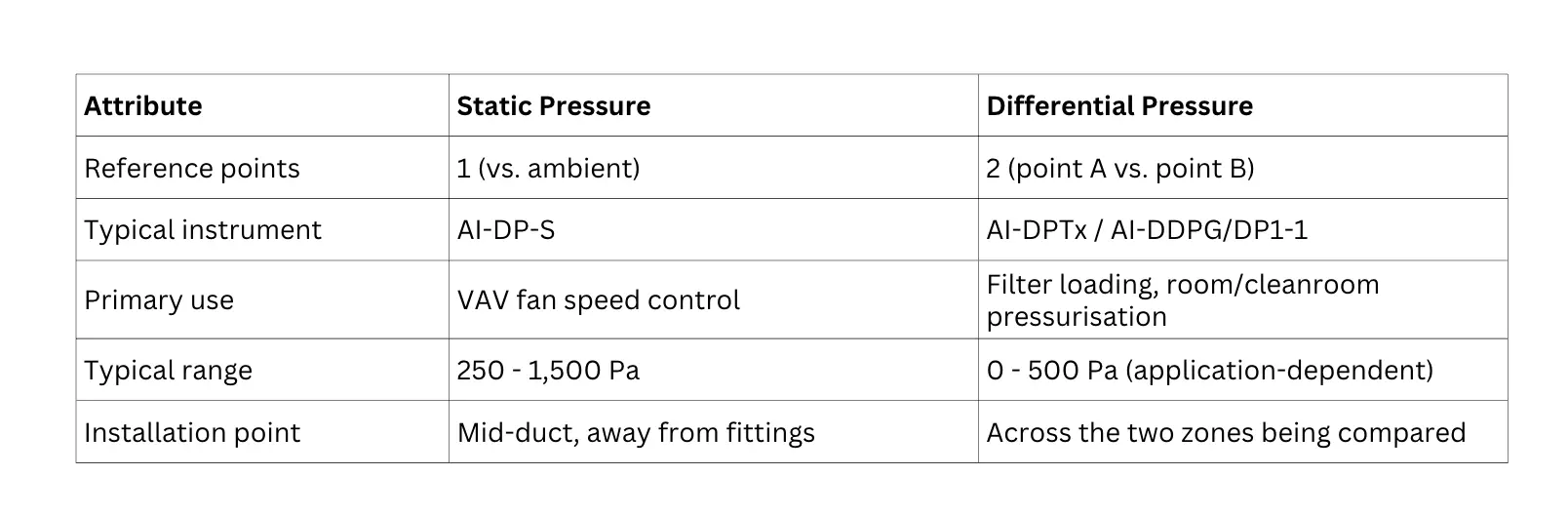
Static Pressure vs Differential Pressure at a Glance
Why the Distinction Affects Instrument Selection
Specifying the wrong instrument type for the task produces a reading that looks plausible but answers the wrong question. Using a static pressure transmitter to try to monitor filter loading, for example, would only show duct pressure at one point rather than the pressure drop across the filter itself, missing the signal entirely. Conversely, a differential pressure transmitter piped incorrectly to reference ambient air on one port, rather than the second monitored point, effectively becomes a static pressure reading by accident, a common commissioning error worth checking during startup.
Both the AI-DP-S and AI-DPTx use the same piezoresistive diaphragm sensing principle; the difference lies entirely in how many ports are piped and what each references, not in the underlying measurement technology.
Field Note
During a commissioning walkthrough on a large commercial AHU, a technician had piped an AI-DPTx with one port left open to the atmosphere instead of connecting it to the filter's downstream tap, effectively turning a filter differential pressure reading into an unintended static pressure reading. The error was caught by comparing the reading against the expected DP range for a new filter and correcting the tubing connection on site.
Frequently Asked Questions
What is the main difference between static pressure and differential pressure?
Static pressure is measured at a single point relative to ambient atmospheric pressure, while differential pressure is the measured difference between two separate points, such as across a filter or between two rooms.
Which transmitter should be used for VAV fan speed control?
A duct static pressure transmitter, such as the AI-DP-S, is used for VAV fan speed control because it provides the single mid-duct reading the fan controller needs to maintain its setpoint.
Can a differential pressure transmitter be used to measure static pressure?
A differential pressure transmitter can measure static pressure if one of its two ports is left open to the ambient atmosphere, but a dedicated static pressure transmitter such as the AI-DP-S is the standard instrument for that application.
Why Trust IAQ Detectors
Ace Instruments manufactures both the AI-DP-S and AI-DPTx transmitters under CE certification and ISO 9001:2015; IAQ Detectors instrumentation covering static and differential pressure applications is installed across more than 1,000 commercial and industrial buildings worldwide.
Know the latest trends in IAQ solutions from the Ace Instruments team


Get inspired and learn more
Instruments that exceed your technical expectations
Comprehensive and customized IAQ solutions for all applications

