
Duct Static Pressure Transmitters: How They Work & Where to Install Them
Introduction
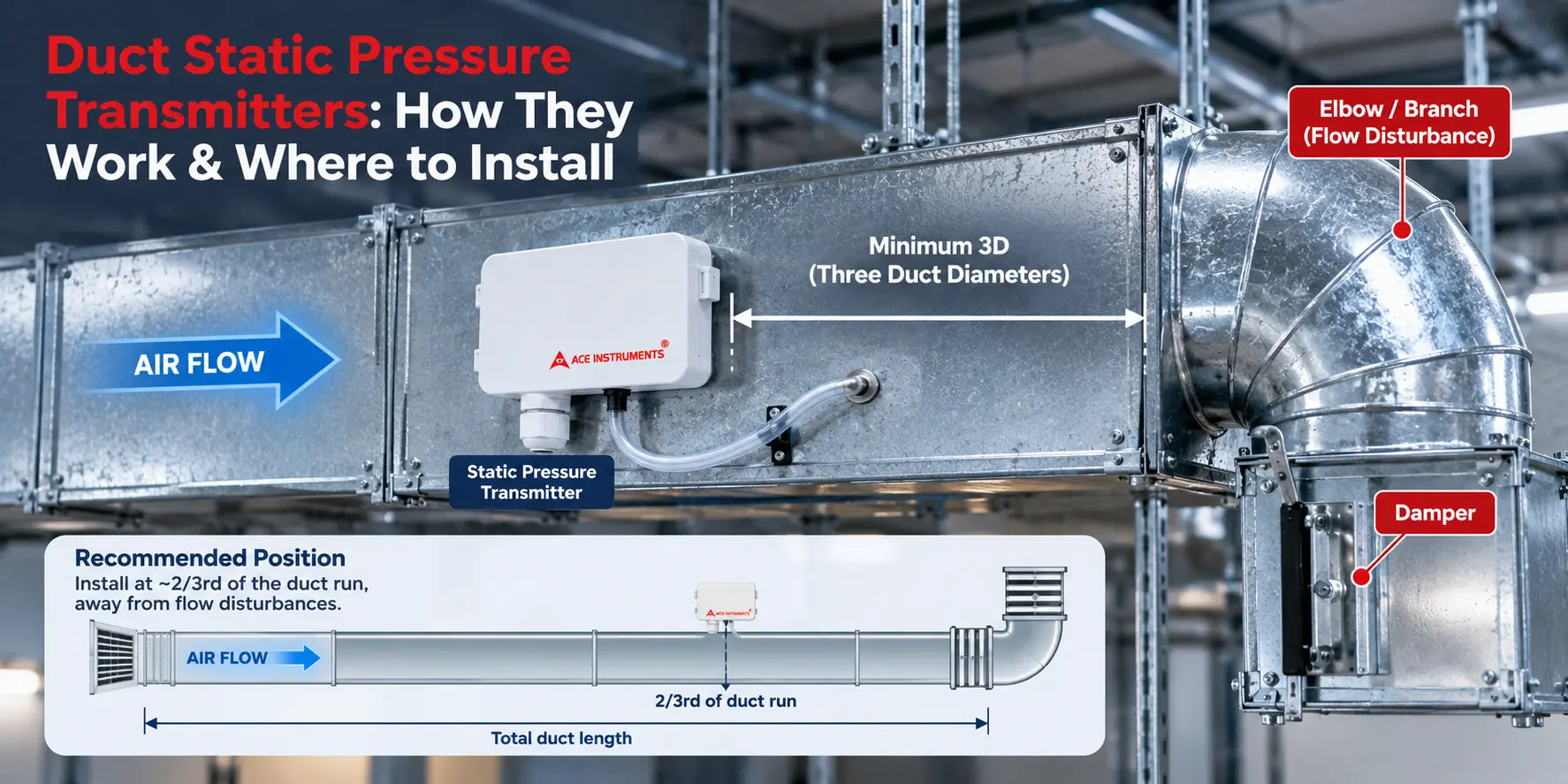
A duct static pressure transmitter measures the outward push of air against duct walls, independent of airflow velocity, and is the primary control input for variable-speed supply fans in VAV systems. Correct placement determines whether the reading reflects real system demand or a local disturbance.
Why Static Pressure Control Matters for VAV Systems
In a variable air volume (VAV) system, the supply fan speed is modulated to maintain a target static pressure setpoint in the main duct, typically measured about two-thirds of the way down the longest duct run. As VAV boxes open and close to satisfy zone temperature demand, static pressure would otherwise swing widely; the transmitter's continuous reading lets the fan controller respond in real time, saving fan energy and preventing duct overpressure or starvation.
Ace Instruments manufactures the AI-DP-S duct static pressure transmitter for exactly this control loop, alongside the room-level and filter-monitoring role served by the IAQ Detectors AI-DPTx differential pressure transmitter.
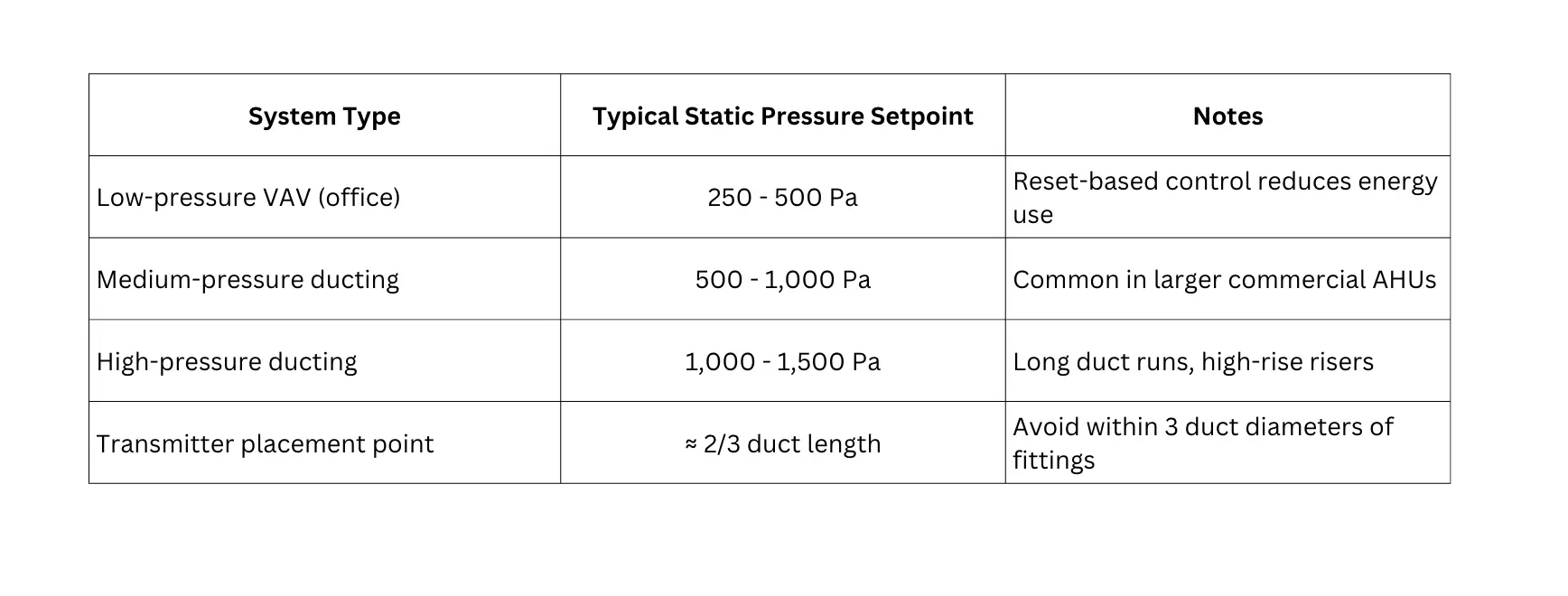
Typical Duct Static Pressure Setpoints
How the AI-DP-S Measures Duct Static Pressure
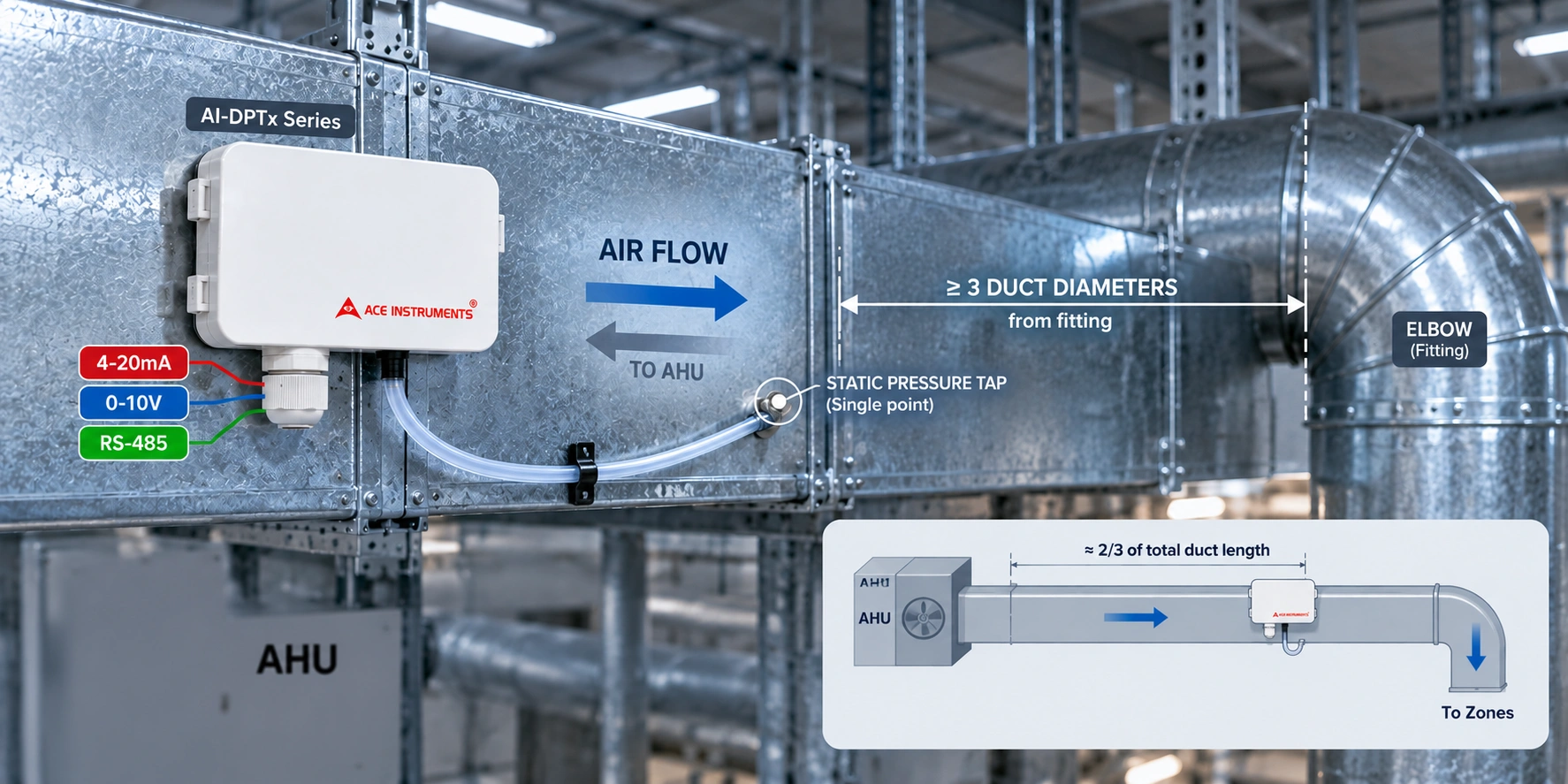
The AI-DP-S uses a single static pressure tap connected to a piezoresistive diaphragm referenced against ambient atmospheric pressure, producing an output proportional to duct static pressure above ambient. Because static pressure is measured perpendicular to airflow rather than in the airstream itself, the tap must be positioned away from elbows, dampers, and branch takeoffs; a minimum of three duct diameters downstream of any fitting is standard practice to avoid turbulence skewing the reading.
Output is available as 4-20mA, 0-10V, or RS-485 Modbus RTU, matching the AI-DPTx family so a single wiring and commissioning standard can be used across both duct static pressure and filter differential pressure points on the same air handling unit.
Field Note
During commissioning of a multi-tenant office AHU, the fan was hunting between two speeds every few minutes. The AI-DP-S tap had been installed within a single duct diameter of a 90-degree elbow; relocating it to the recommended distance downstream stabilised the static pressure signal immediately and the fan control loop settled within the expected deadband.
Frequently Asked Questions
What is duct static pressure?
Duct static pressure is the outward force air exerts on the walls of a duct, measured perpendicular to airflow direction, and is used to control variable-speed supply fans in VAV systems.
Where should a duct static pressure transmitter be installed?
It should be installed roughly two-thirds of the way along the longest duct run, at least three duct diameters away from elbows, dampers, or branch takeoffs to avoid turbulent readings.
What is the difference between static pressure and differential pressure?
Static pressure is measured relative to ambient atmospheric pressure at a single point in a duct, while differential pressure is the difference between two separate points, such as across a filter or between two rooms.
Why Trust IAQ Detectors
The AI-DP-S duct static pressure transmitter is manufactured by Ace Instruments at its Hyderabad facility under CE certification and an ISO 9001:2015 quality system; IAQ Detectors instrumentation is installed in more than 1,000 commercial and industrial buildings worldwide.
Know the latest trends in IAQ solutions from the Ace Instruments team


Get inspired and learn more
Instruments that exceed your technical expectations
Comprehensive and customized IAQ solutions for all applications

